

Thank you for Subscribing to Med Tech Business Review Weekly Brief

TVM Capital
Sascha Berger, General Partner & Catello Somma, Associate
How To Make The Right Medtech Investment?
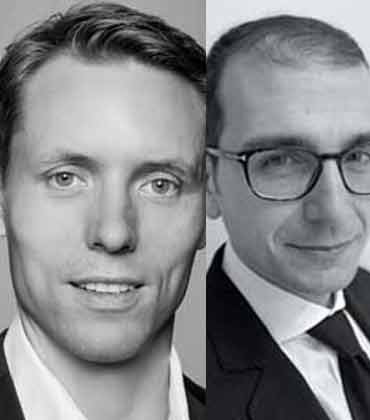
Sascha Berger
Sascha Berger has more than 15 years of professional experience. He brings extensive experience in deal-making, life sciences venture capital, technology assessment and investment management with an academic background in chemistry and finance.
Catello Somma is active in deal flow generation, investment due diligence, deal and exit transactions, investor communication, and fundraising support. He is a biotech start-up founder with more than ten years of clinical and corporate development experience. What challenges do you face as an investor while investing in a biotech or MedTech Company? Sascha –Besides early-stage therapeutics, we seek investments in innovative later-stage companies. More precisely, our investment is going toward late-stage Med Tech companies, which ideally have approved products to provide them 10 to 20 million US dollars in growth capital to reach significant value inflection points. When there is significant market uncertainty, such as Covid-19, many businesses find it difficult to commercialize their products because they need more funding. For businesses to survive in harsh circumstances, investors need to identify companies with innovations that disrupt the industry and meet client needs. Unfortunately, due to the urgent need for cash, many investors are freezing their new investments; therefore, we must be careful with the money we spend. Catello - I think it’s important for investors to be more afraid of releasing cash and funding to secure enough cash to cover the upcoming retention. The other difficulty is that businesses must ensure a sufficient supply of the correct raw materials and stocks to create their products, distribute them, and generate revenue. How do you identify companies with disruptive technologies to invest in? Sascha- There is no hidden formula of how to best invest, but I believe common sense for investors is important. We are present on innovation and R&D conferences, venture panels and collaborate with accelerators, research clusters and universities. People will also approach you proactively for investments if you are a well-known investor. To understand if companies are truly distruptive, we consult the customer's potential or existing clients. It's the best source for identifying whether the companies are addressing the real customerneed or not. Although some businesses have scientific or engineering backgrounds, they do not address the market's actual challenges, and even when they do, there are few financial issues to use those solutions. To get to a truly disruptive product that is functional, approved, or awaiting approval, takes a long breath. These businesses require a sizable quantity of funding. We are present in areas where a lot of innovation occurs and actively seek to get in touch with these businesses. People will approach you more regularly for investment if you are a well-known investor. "There is no hidden source of how to invest, but I believe common sense for investors is important." Catello- I always believe in reaching market fit, product fit, and Accessibility. To be transformational against what is currently employed by the major players in this consolidated market, the entrepreneur must be informed of the market, the competitors, and the product. Additionally, the company or the entrepreneur must fine-tune the Accessibility and try to maximize the value potential at the exit. Is there any recent technology you have a keen interest in investing that may be Indian or any company that has come out with a technology that has moved the industry? Catello- For me, India is like geography in terms of innovation since they can find, patent, and pinpoint the market’s demands. Entrepreneur’s inventors are providing highly practical solutions to meet this need. What matters is that the business owner abides by global regulations, which are in place to facilitate adoption in the major markets on a worldwide scale. I think there is nothing less attractive or competitive than a US company as long as the Indian entrepreneur has a global perspective. Sascha- A good example of investing in an attractive technology provider is our most recent medical technology partner AEK medical. In the catheterization lab, they address the brief, particular needs of interventional cardiologists or radiologists to reduce or eliminate scatter radiation. Numerous technologies from the big players have invested hundreds of millions of dollars in enhancing catheter operations, but we still rely on radioactive reagents. Technologies to combat radioactivity and the use of radioactive reagents are currently being developed. Therefore, those interventional cardiologists will continue to receive a lot of radiation for the likely next two decades. However, AEK Medical has come up with a smart solution to reduce radiation exposure to everyone in the cath lab while still providing the patient with a radiation barrier throughout the treatment. I think their next iteration of the invention will be so effective that the individuals using it will be able to remove their bulky aprons, which are a significant hardship for them while standing in the cath lab for extended periods of time. In addition, it serves as a fantastic illustration of the need to contact hospitals right away. What would be your single piece of advice for the upcoming professionals in this field? Catello- My only advice to the entrepreneur is to never give up. The most important thing is to focus on the deliverables and projects that are most valuable. Sascha- I would suggest being more careful about spending. However, keep going on with projects with the highest return on investment eventually because there will be different times. Many companies have good innovative solutions, but unfortunately, they have run out of money. There was no next funding round, and they had to close down. That’s why I believe people have to be smart dramatically to reduce that money burn and continue innovating in the future.The articles from these contributors are based on their personal expertise and viewpoints, and do not necessarily reflect the opinions of their employers or affiliated organizations.
